Flights land early, terminals sprawl for miles and taxi ranks can leave you standing with three suitcases and no driver in sight. Booking airport transfers in advance removes that guesswork. This guide breaks the private airport transfer process into six steps, in the order you’ll actually need them.
An airport transfer is a pre-booked, door-to-door journey arranged in advance with a fixed price and a named driver. Unlike a taxi hailed on arrival, the driver tracks your flight and adjusts the pickup time for delays.
Step 1: Decide Private or Shared
Before you book, figure out which type of journey actually fits your needs. Private vs shared airport transfers come down to time against cost.
A shared transfer groups you with other passengers heading the same way, which lowers the price but adds extra stops. A private transfer books the vehicle exclusively for you and your family or friends, with a direct route and a fixed collection time.
For business travel or an early flight, that saved time usually pays for itself.
Step 2: Pick the Right Vehicle
Among airport transfer options, the types of vehicles make a real difference. A standard saloon suits two passengers with carry-on bags.
Families or anyone travelling with golf clubs, pushchairs or ski bags will need an estate or a people carrier. An eight-seater minibus works out cheaper per head than booking two separate cars for a group.
Ask about boot capacity before you book. A vehicle too small for the luggage is one of the most repeated complaints in transfer reviews and it’s avoidable with one extra question.
| Vehicle Category | Saloon | Estate | MPV | Executive |
| Passenger Count | 4 | 4 | 5 | 3-4 |
| Luggage Count | 2 large and 1 small suitcase | 3 large and 2 small suitcases | 3 large and 2 small suitcases | 2 large and 2 small suitcases |
Step 3: Check the Operator’s Features and Licensing
These airport transfer features are worth checking before you book: driver licensing, vehicle condition, driver conduct and pricing clarity. A legitimate operator confirms all of it without hesitation and vets drivers for both conduct and paperwork, so a stressful day isn’t made worse by a rude driver or an unclean car.
On pricing, ask how the fare is calculated via distance, vehicle type and time of day, and whether waiting time or “upgrade” charges sit inside the quote. Confirm the payment method too: card, cash or a deposit plus balance, so there’s no confusion on arrival. That’s a different experience from waving down a taxi service outside the terminal and hoping for the best.
Step 4: Book Your Transfer Online or by Phone
With your vehicle and operator decided, the airport transfer booking process usually takes under five minutes. Enter your flight number, pickup address and passenger count, then confirm.
That covers the booking and pickup process end to end. A reputable operator confirms with the driver’s name, vehicle registration and a direct contact number, rather than just an app icon on a map.
Step 5: Get Your Confirmation and Driver Details
You should receive confirmation by email or text with the driver’s name and vehicle details soon after booking. Most drivers also text or call around thirty minutes before arrival.
That one habit solves a common complaint about budget minicabs: a driver arriving with zero communication and no way to reach them.
Step 6: Follow the Airport Transfer Arrival Procedure
This is where most bookings go wrong. Heathrow alone has five terminals across two sites, so always confirm which one your driver is briefed for. Terminal 2’s arrivals concourse looks nothing like Terminal 5’s pickup bay.
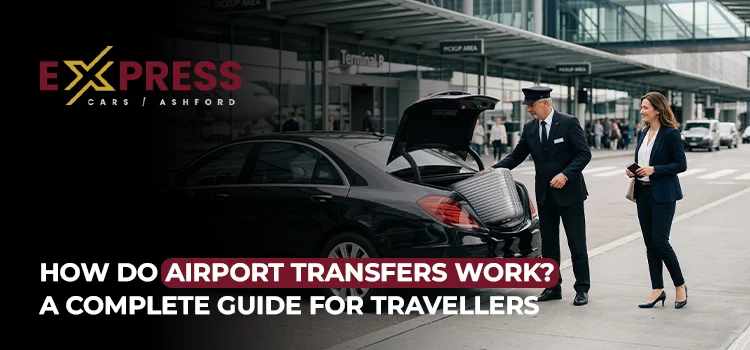
A properly briefed driver confirms the exact meeting point before you land, whether it’s the kerbside or the arrivals hall. Kerbside means the driver collects you outside at a marked bay.
Booking a meet and greet means the driver waits inside the arrivals hall holding a name board, useful if you don’t know the airport layout. The driver should also check your flight status in real time, so an early or delayed landing doesn’t leave either of you waiting.
How Airport Transfers Compare to Taxis and Rideshare
A booked transfer removes the need to stand in a queue entirely, since the car is already assigned before you touch down. Rideshare pricing also surges during busy flight banks, so a fare at 6 am can double by 6 pm.
A pre-booked transfer locks the price weeks ahead instead. The trade-off is spontaneity. A taxi rank suits flexible plans, but anyone booking a taxi to Gatwick or any other airport gets more value from a confirmed pickup time.
Get a Taxi Hire for Your Next Trip Across Town
Book a taxi now or get in touch with us if you have any queries or concerns.
Frequently Asked Questions (FAQs)
Do airport transfers wait for you?
Yes. Operators track your flight and adjust pickup automatically in case of delays or early arrivals, including a waiting period after landing. The standard waiting time is around 15 minutes, but it’s best to confirm with the operator.
Do airport transfers do multiple pick-ups and drop-offs?
Private transfers are typically one pickup and one drop-off. Shared transfers can include several stops, which is why they cost less but take longer.
Why is an airport transfer important?
It removes the two most stressful parts of air travel, including finding transport with luggage and paying an unpredictable fare. Airport transfers solve these by offering fixed fares at the time of booking and confirming driver’s availability in advance.
How do invoices and receipts work for airport transfers?
Most operators email a receipt automatically. Business accounts can usually request monthly invoicing, worth setting up for regular work travel.
What is the difference between private and shared airport transfers?
A private transfer is exclusive to your party with a direct route. A shared transfer groups passengers heading the same way, lowering cost but adding stops.
How do airport transfers work for business events?
Operators can coordinate group arrivals across multiple flights, provide invoicing for expense claims, and offer executive vehicles for client-facing travel.